
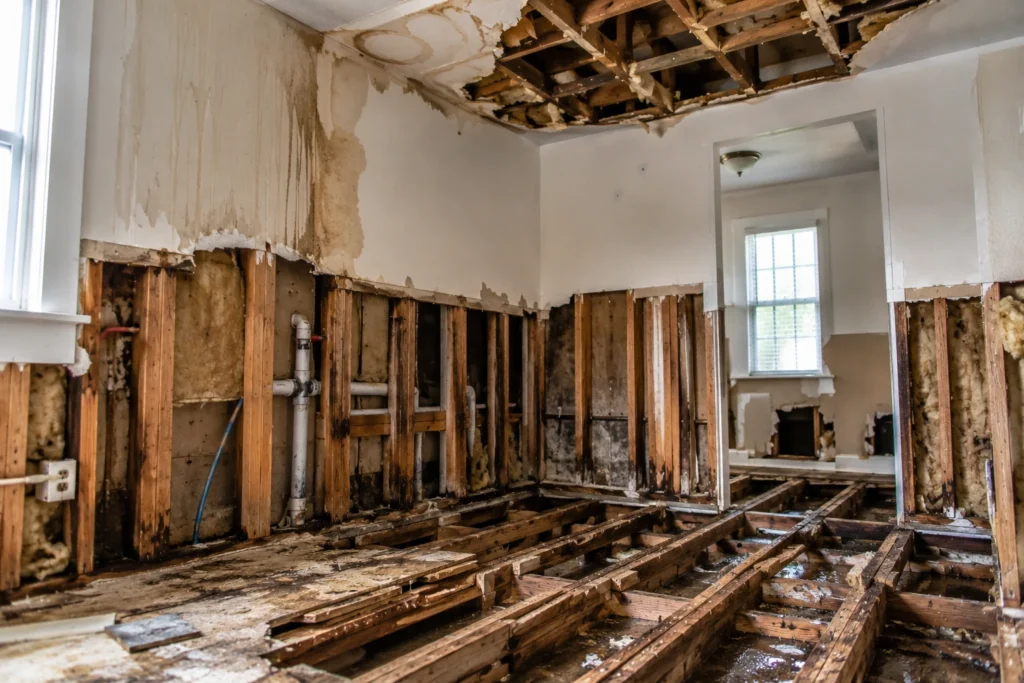
Water damage can transform an ordinary day into a stressful and expensive ordeal in a matter of minutes. A burst pipe. A failed water heater. A roof leak after a storm. Suddenly, floors are soaked, drywall is deteriorating, and personal belongings are at risk. For many property owners, navigating Terrell, TX Water Damage Insurance Claims becomes almost as challenging as the damage itself. Insurance policies are designed to provide protection when covered losses occur. However, filing a claim does not automatically guarantee a smooth experience. Coverage questions arise. Damage assessments vary. Repair estimates can differ significantly from actual restoration costs.
The reality is simple. Water damage claims often involve far more than what is immediately visible. Many homeowners focus on the standing water. Insurance companies often focus on what can be seen during a brief inspection. Meanwhile, hidden moisture may continue affecting walls, insulation, flooring systems, and structural components long after the initial event.
This complexity resembles the concept of Emergence, where interconnected systems create outcomes that are difficult to predict by examining individual components alone. Water losses frequently behave in a similar manner. What appears to be a minor leak may ultimately reveal extensive hidden damage throughout a property. For property owners in Terrell, understanding the claims process can help protect both the property and the financial recovery available under an insurance policy. Whether the damage results from plumbing failures, appliance malfunctions, severe weather, or unexpected water intrusion, knowing what steps to take can significantly influence the outcome of a claim.
Understanding Water Damage Insurance Claims
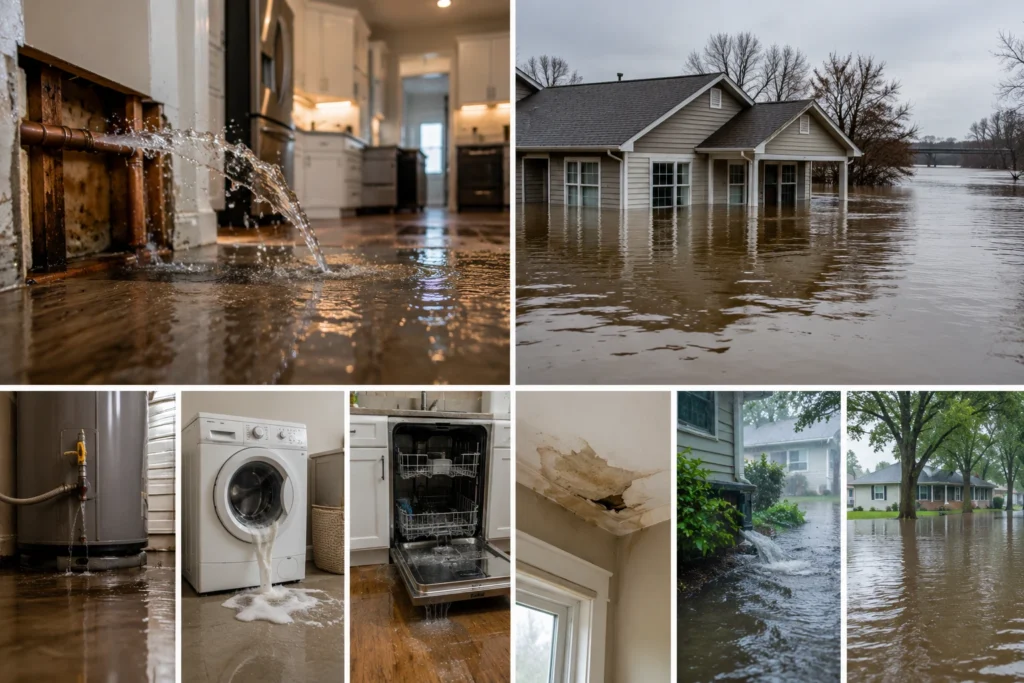
Not all water damage claims are created equal. Insurance companies classify water losses based on the source of the water, the timing of the damage, and the policy language governing the claim. Generally speaking, most homeowner policies provide coverage for sudden and accidental water damage events.
Examples may include:
- Burst plumbing lines
- Water heater failures
- Washing machine hose ruptures
- Dishwasher leaks
- Accidental overflows
- Storm-related roof leaks
However, coverage often becomes more complicated when damage develops gradually over time. For example, a pipe that slowly leaks behind a wall for several months may trigger different policy provisions than a pipe that bursts unexpectedly and floods an entire room overnight. The distinction matters. Insurance companies frequently examine whether the damage resulted from a sudden event or long-term deterioration.
Water Damage vs. Flood Damage
One of the most misunderstood aspects of property insurance involves the difference between water damage and flood damage. Many property owners use these terms interchangeably. Insurance policies do not. In many cases, standard homeowner policies cover certain types of water damage while excluding flooding that originates from rising surface water.
Consider the following examples:
| Scenario | Typical Coverage Consideration |
| Burst pipe inside home | Often covered |
| Water heater rupture | Often covered |
| Appliance overflow | Often covered |
| Storm water entering through damaged roof | Often covered |
| River overflow | Typically requires flood insurance |
| Surface water entering home from outside | Often excluded |
Every policy differs, but understanding this distinction helps avoid confusion during the claim process.
Why Water Damage Claims Are Frequently Disputed
Water damage claims generate disputes for several reasons. First, determining the exact cause of loss is not always straightforward. Second, hidden damage may not become apparent during an initial inspection. Third, repair costs can vary significantly depending on how thoroughly the property is evaluated.
Insurance carriers may question:
- When the damage occurred
- What caused the damage
- Whether maintenance issues contributed
- Whether portions of the damage existed previously
- The scope of necessary repairs
These questions often become central issues during Terrell, TX Water Damage Insurance Claims.
Common Causes of Water Damage Claims in Terrell Homes and Businesses
Water damage can originate from numerous sources. Some are obvious. Others remain hidden until substantial damage has already occurred.
Burst and Frozen Pipes
Although North Texas is known for its warm climate, freezing temperatures occasionally create serious plumbing problems. When water freezes inside pipes, pressure builds rapidly. Eventually, pipes can crack or burst. The resulting water release may continue for hours before discovery.
Damage frequently affects:
- Drywall
- Flooring
- Cabinets
- Insulation
- Electrical systems
- Personal property
A relatively small plumbing failure can produce surprisingly extensive restoration costs.
Roof Leaks Following Severe Weather
Storm activity presents another common source of water intrusion. Strong winds can damage shingles, flashing, vents, and roofing components. Rainwater then finds pathways into the structure. The problem is that roof leaks rarely remain isolated.
Water often travels significant distances before becoming visible. A ceiling stain may originate far from the actual roof damage. This creates challenges for both property owners and insurance adjusters attempting to identify the full scope of loss.
Appliance Failures
Modern homes contain numerous appliances connected to water supply lines. Each connection represents potential risk.
Common sources include:
- Washing machines
- Dishwashers
- Refrigerators
- Ice makers
- Water filtration systems
- Water heaters
Supply line failures can release large volumes of water quickly. Even slow leaks may cause extensive hidden damage before discovery.
HVAC System Leaks
Air conditioning systems generate condensation during normal operation. When drain lines clog or condensate pans fail, water accumulation can occur. Many property owners overlook HVAC-related water damage because the initial signs appear minor. Unfortunately, moisture trapped in walls, ceilings, or flooring systems may continue causing damage long after the original leak begins.
Sewer Backups and Drain Failures
Sewer-related losses often involve additional complications. Coverage may depend upon specific policy endorsements. Cleanup costs can become substantial due to contamination concerns. Property owners should review policy provisions carefully when sewer backups occur.
Immediate Steps to Take After Discovering Water Damage
The first few hours following a water loss can significantly influence both property damage and claim outcomes. Quick action matters.
Stop the Water Source
Whenever safe to do so, stop the source of water immediately.
This may involve:
- Shutting off the main water supply
- Turning off appliances
- Contacting emergency plumbers
- Isolating damaged plumbing lines
Preventing additional water intrusion helps minimize further damage.
Protect the Property
Insurance policies often require policyholders to take reasonable steps to prevent additional damage.
Examples include:
- Water extraction
- Tarping roof openings
- Temporary repairs
- Moving contents from affected areas
These actions help preserve the property while supporting the claim.
Document Everything
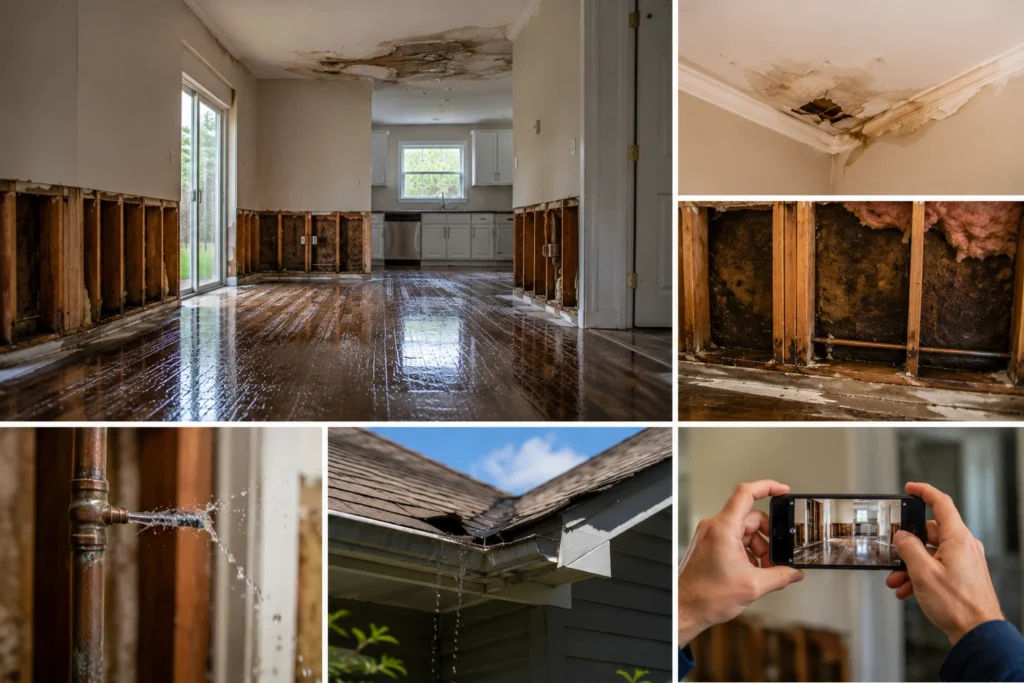
Documentation is one of the most valuable tools available during a claim. Take photographs before cleanup begins whenever possible.
Capture:
- Wide-angle room views
- Close-up damage photos
- Water source locations
- Damaged personal property
- Flooring conditions
- Ceiling damage
- Wall damage
Videos can also provide useful evidence. The goal is to create a detailed record of conditions before repairs alter the scene.
Notify the Insurance Company Promptly
Most policies require timely reporting. Delays may create additional questions regarding:
- Cause of loss
- Extent of damage
- Claim validity
Prompt reporting helps establish a clear timeline.
Keep Every Receipt
Expenses related to emergency mitigation often become important during claim evaluation.
Save records for:
- Water extraction services
- Drying equipment
- Temporary repairs
- Emergency lodging
- Contractor consultations
Small expenses can add up quickly.
Detailed records help support reimbursement requests.
The Water Damage Insurance Claim Process
Many policyholders have never filed a significant insurance claim before. As a result, the process can feel unfamiliar. Understanding the typical stages helps reduce uncertainty.
Filing the Initial Claim
The process begins with claim notification.
Basic information usually includes:
- Date of loss
- Cause of damage
- Property location
- Contact information
- Emergency mitigation efforts
Providing accurate information from the start helps establish a clear foundation.
Insurance Company Inspection
After receiving the claim, the insurance carrier generally schedules an inspection.
The adjuster evaluates:
- Visible damage
- Potential causes
- Areas requiring repair
- Emergency mitigation efforts
However, initial inspections are often limited by time and accessibility. Not every issue becomes apparent during a single site visit.
Damage Assessment and Scope Development
This phase determines what repairs may be necessary.
A thorough assessment often includes:
- Moisture mapping
- Structural evaluations
- Flooring inspections
- Wall cavity inspections
- Content inventories
The more comprehensive the evaluation, the more accurate the repair scope typically becomes.
Estimate Preparation
Repair estimates convert physical damage into financial values. Unfortunately, estimate accuracy depends entirely upon scope accuracy. If damage is overlooked, repair costs may be underestimated. This becomes one of the most common challenges associated with Terrell, TX Water Damage Insurance Claims.
Supplemental Claims
Repairs frequently uncover hidden conditions.
Examples include:
- Saturated insulation
- Hidden mold growth
- Subfloor damage
- Structural deterioration
- Electrical issues
When additional covered damage is discovered, supplemental claims may become necessary. Contrary to popular belief, the initial estimate is not always the final estimate. In fact, supplements are common in larger water losses.
Hidden Water Damage Insurance Adjusters Often Miss
Water rarely remains where it first appears. Instead, it travels. It spreads through building materials. It follows gravity. It penetrates spaces that cannot be seen during a basic inspection. This creates one of the biggest challenges in water damage claims.
Moisture Behind Walls
Drywall may appear intact even when substantial moisture exists inside wall cavities. Without proper moisture detection tools, hidden damage can remain undetected.
Over time, this moisture may contribute to:
- Material deterioration
- Odors
- Mold growth
- Structural concerns
Saturated Insulation Insulation frequently absorbs water like a sponge. Once saturated, insulation loses effectiveness and may require replacement. Unfortunately, insulation damage often remains hidden behind finished surfaces.
Subfloor Damage
Floor coverings sometimes conceal underlying problems.
Water can penetrate:
- Hardwood flooring
- Laminate flooring
- Tile assemblies
- Carpet systems
Beneath the surface, subfloors may swell, weaken, or deteriorate.
These issues may not become visible until repairs begin.
Electrical System Damage
Water and electricity create obvious safety concerns.
However, electrical damage is not always immediately apparent.
Components potentially affected include:
- Outlets
- Wiring
- Breakers
- Panels
- Fixtures
Professional evaluation is often necessary following significant water intrusion.
Mold Development Risks Following Water Damage
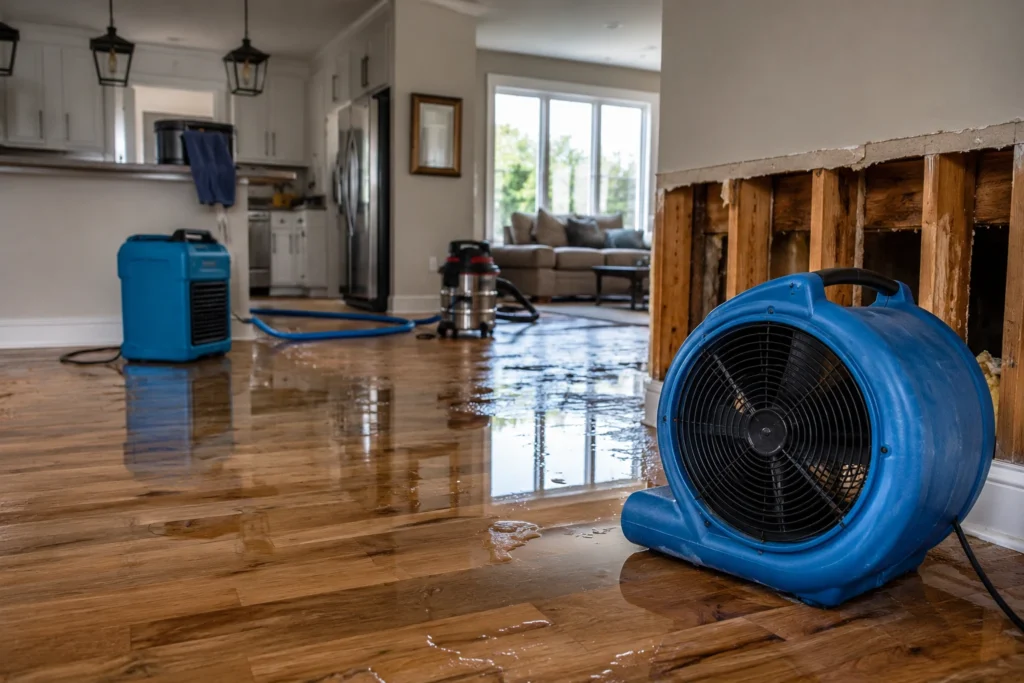
Water damage does not end when the visible water disappears. In many situations, the most expensive problems emerge later. Moisture trapped inside building materials creates conditions that may support mold growth. Many common construction materials exhibit a property known as hygroscopy, which allows them to absorb and retain moisture from their surroundings. Depending on environmental conditions, mold can begin developing surprisingly quickly after a water intrusion event. This is why professional drying matters. Merely removing standing water is not enough.
Affected materials often require:
- Moisture testing
- Controlled drying
- Air movement
- Dehumidification
- Ongoing monitoring
Failure to address hidden moisture can lead to secondary damage that becomes more expensive and more difficult to repair. Insurance policies vary considerably regarding mold coverage. Some policies include limited mold benefits. Others impose strict caps. Certain policies exclude mold-related losses entirely unless specific conditions are met. Understanding these limitations becomes essential when evaluating a water damage claim.
Structural Damage Concerns
Water is remarkably destructive. It weakens wood. It corrodes metal. It degrades drywall. It damages adhesives and fastening systems. The longer moisture remains present, the greater the potential impact.
Structural concerns commonly involve:
| Building Component | Potential Water Damage Impact |
| Framing | Warping and deterioration |
| Subfloors | Swelling and weakening |
| Roof decking | Rot and decay |
| Drywall | Loss of structural integrity |
| Fasteners | Corrosion |
| Support members | Reduced strength |
Many of these conditions remain hidden until repairs begin. As a result, repair costs sometimes increase significantly after demolition reveals concealed damage. This is one reason thorough inspections are so important during Terrell, TX Water Damage Insurance Claims.
Why Proper Documentation Can Increase Claim Accuracy
Insurance companies evaluate evidence. The stronger the documentation, the easier it becomes to support the full scope of damage. Many claim disputes originate from incomplete documentation rather than actual disagreements about the loss itself.
Photographs and Videos
Photos tell a story. They establish conditions immediately after the loss. They preserve evidence before repairs begin. They help demonstrate the progression of damage.
Effective documentation includes:
- Wide-angle room photographs
- Close-up damage images
- Water source documentation
- Exterior photographs when applicable
- Content damage photographs
Videos can provide additional context that still images may miss.
Moisture Mapping Reports
Professional restoration companies often perform moisture mapping.
These reports identify:
- Wet building materials
- Areas requiring drying
- Hidden moisture locations
- Progress during mitigation
Such reports can provide valuable support during claim evaluation.
Contractor Evaluations
Repair professionals frequently identify issues that are not immediately visible during insurance inspections.
Independent evaluations may uncover:
- Hidden structural concerns
- Electrical damage
- Flooring issues
- Roofing-related water intrusion
- Code-related repair requirements
Additional professional opinions often contribute to a more complete understanding of the loss.
Personal Property Inventories
Water damage often affects more than the building itself.
Contents may include:
- Furniture
- Electronics
- Clothing
- Appliances
- Decorative items
- Business equipment
Creating a detailed inventory helps support personal property claims.
Whenever possible, include:
- Photographs
- Purchase dates
- Approximate values
- Replacement costs
The more detail provided, the stronger the documentation becomes.
Understanding Coverage Limitations and Exclusions
Many policyholders focus on coverage. Fewer focus on exclusions. Both matter. Insurance policies contain provisions that define what is covered and what is not. Understanding these provisions helps manage expectations during the claim process.
Gradual Damage Exclusions
Many policies distinguish between sudden losses and gradual deterioration.
For example:
- Long-term leaks
- Ongoing seepage
- Repeated moisture exposure
may receive different treatment than sudden pipe failures. Insurance companies often investigate whether damage occurred suddenly or developed over time.
Maintenance-Related Issues
Insurance is generally designed to address unexpected events. Maintenance responsibilities typically remain with the property owner.
Examples may include:
- Neglected plumbing systems
- Deteriorated roofing materials
- Unrepaired leaks
- Deferred maintenance issues
Policy language ultimately determines how these situations are handled.
Flood Exclusions
As discussed earlier, flood damage often requires separate coverage. Property owners should understand whether their location presents elevated flood risks and review their insurance programs accordingly.
Mold Limitations
Many policies contain specific mold limitations. Coverage amounts may differ substantially from the overall dwelling limit. Reviewing policy language carefully can help identify potential restrictions before disputes arise.
Deductibles
Deductibles affect final settlement amounts.
Policyholders should understand:
- Applicable deductible amounts
- Percentage deductibles
- Special deductibles
- Water-specific provisions
These details directly impact recovery.
Challenges Property Owners Face During Water Damage Claims
Not every claim proceeds smoothly. In fact, several recurring challenges appear repeatedly.
Undervalued Repair Estimates
One of the most common concerns involves incomplete repair estimates. If damage is overlooked, repair costs may be underestimated.
Commonly missed items include:
- Insulation replacement
- Hidden moisture damage
- Flooring removal
- Structural repairs
- Code upgrades
An estimate can only account for damage that has been identified.
Incomplete Scope of Damage
Scope accuracy remains one of the most important factors in claim outcomes.
An incomplete scope often results in:
- Underpayment
- Repair delays
- Supplemental claims
- Contractor disputes
The issue is not always pricing. Often, it is missing damage.
Delays in Claim Handling
Water damage worsens with time.
Extended claim delays may create:
- Additional property deterioration
- Contractor scheduling problems
- Increased repair costs
- Frustration for policyholders
Prompt claim handling benefits everyone involved.
Coverage Disputes
Interpretation differences sometimes arise.
Questions may involve:
- Cause of loss
- Policy provisions
- Exclusions
- Damage timelines
These disagreements often require additional documentation and investigation.
Depreciation Issues
Insurance estimates frequently include depreciation. Depending on policy provisions, recoverable depreciation may become available after repairs are completed. Understanding how depreciation works helps avoid confusion during settlement discussions.
How Public Adjusters Help With Water Damage Claims
Most property owners file very few insurance claims during their lifetime. Insurance companies, on the other hand, handle claims every day. That difference in experience can matter.
Independent Damage Evaluation
Public adjusters conduct detailed inspections focused on identifying covered damage.
This often includes:
- Documentation review
- Site inspections
- Scope development
- Damage analysis
The objective is to ensure the claim reflects the full extent of covered damage.
Policy Review
Insurance policies can be complex. Coverage provisions, exclusions, endorsements, and limitations all influence claim outcomes.
A detailed policy review helps clarify:
- Available benefits
- Coverage limitations
- Claim requirements
- Additional recovery opportunities
Claim Documentation
Thorough documentation strengthens claim presentation.
Public adjusters often assist with:
- Evidence collection
- Damage inventories
- Repair estimates
- Supporting reports
- Supplemental claim preparation
Settlement Negotiations
Negotiation remains an important part of many claims. The goal is straightforward. Reach an accurate settlement that reflects covered damages and necessary repairs.
Why Water Damage Claims in Terrell Require Careful Attention
Properties in Terrell face a variety of water damage risks. Storm activity. Aging plumbing systems. Roof leaks. Appliance failures. Unexpected water losses occur every year. When they do, claim accuracy becomes critical. An overlooked issue today can become a major expense tomorrow.
Unfortunately, many hidden conditions are not immediately visible during initial inspections. That is why property owners in Terrell often benefit from obtaining independent evaluations before finalizing repairs. A careful review may uncover important issues that would otherwise remain unresolved.
Common Mistakes Property Owners Make After Water Damage
Certain mistakes occur repeatedly. Avoiding them can strengthen a claim significantly.
Waiting Too Long to Report the Loss
Timely reporting helps establish a clear timeline. Delays can create unnecessary questions regarding the cause and extent of damage.
Discarding Damaged Materials Too Soon
Damaged materials often serve as important evidence. Whenever practical, document conditions thoroughly before disposal.
Accepting the First Settlement Immediately
The initial settlement may not always reflect the complete scope of damage. Additional evaluation can sometimes reveal overlooked issues.
Failing to Document Everything
Photos. Videos. Receipts. Repair records. Contractor reports. Every piece of documentation helps tell the story of the loss.
Ignoring Hidden Damage
Visible damage rarely tells the entire story. Moisture frequently extends beyond the areas that initially appear affected. This principle applies to many property claims, including situations involving an Underpaid Hail Damage Insurance Claim, where hidden or overlooked conditions may significantly influence the final scope of repairs.
How to Maximize Your Water Damage Insurance Recovery
Property owners cannot control when water damage occurs. They can control how they respond. Several steps can improve claim outcomes.
Act Quickly
Immediate action helps limit additional damage. It also creates stronger documentation.
Preserve Evidence
Photographs and records become increasingly valuable as repairs progress. Preserve as much evidence as possible.
Maintain Detailed Records
Keep organized files containing:
- Claim correspondence
- Estimates
- Receipts
- Inspection reports
- Contractor communications
Organization matters.
Obtain Independent Evaluations
Additional professional opinions often provide valuable insight into hidden damage and repair requirements.
Understand Your Policy
Knowledge reduces surprises. Reviewing policy provisions helps clarify coverage and obligations.
Seek Professional Assistance When Necessary
Complex claims often benefit from experienced guidance. The larger the loss, the more important claim accuracy typically becomes.
Why Property Owners Should Review Every Settlement Carefully
Insurance estimates are important. They are not necessarily final. Repairs frequently uncover conditions that were impossible to identify during initial inspections. Additional moisture. Hidden structural damage. Saturated insulation. Electrical concerns.
These discoveries can affect both repair costs and claim values. Careful review helps ensure that settlement decisions are based on complete information rather than assumptions. The ultimate objective should always be proper restoration. Not temporary fixes. Not partial repairs. Full restoration.
Conclusion
Water damage has a way of creating problems that extend far beyond what is visible on the surface. A small leak can evolve into extensive repairs. Hidden moisture can affect structural components. Mold concerns can emerge. Repair costs can increase dramatically as additional damage becomes visible. That is why Terrell, TX Water Damage Insurance Claims deserve careful attention from the very beginning.
Prompt action, thorough documentation, accurate scoping, and a clear understanding of policy provisions all contribute to stronger claim outcomes. Property owners who take the time to investigate the full extent of damage are often in a better position to pursue complete restoration and avoid costly surprises later.
When substantial water damage occurs, the goal should remain simple: identify all covered damage, document it thoroughly, and ensure repairs address the full scope of the loss. A properly evaluated claim helps protect both the property and the investment it represents. For property owners facing water damage challenges, understanding the claims process is one of the most effective steps toward achieving a fair and accurate resolution.
FAQs
In many cases, homeowners insurance covers sudden and accidental water damage, but coverage depends on the cause of the loss and policy terms.
The timeframe varies by policy and state regulations, but it is generally best to report water damage as soon as possible.
Stop the source of water if it is safe to do so, document the damage, and notify your insurance company promptly.
Some policies provide limited mold coverage, while others may exclude it or impose specific coverage limits.
Yes. If hidden damage is discovered and related to a covered loss, it may be addressed through a supplemental claim.
Take photographs and videos, save receipts, keep repair records, and document all damaged property and affected areas.
Claims may be denied due to policy exclusions, maintenance-related issues, delayed reporting, or disputes regarding the cause of loss.
A supplemental claim seeks additional payment when covered damage is discovered after the initial claim estimate is completed.
Not necessarily. It is important to review the estimate carefully and ensure all covered damages have been identified before accepting a settlement.
A public adjuster can evaluate damage, review policy provisions, document losses, and negotiate with the insurance company on behalf of the policyholder.