
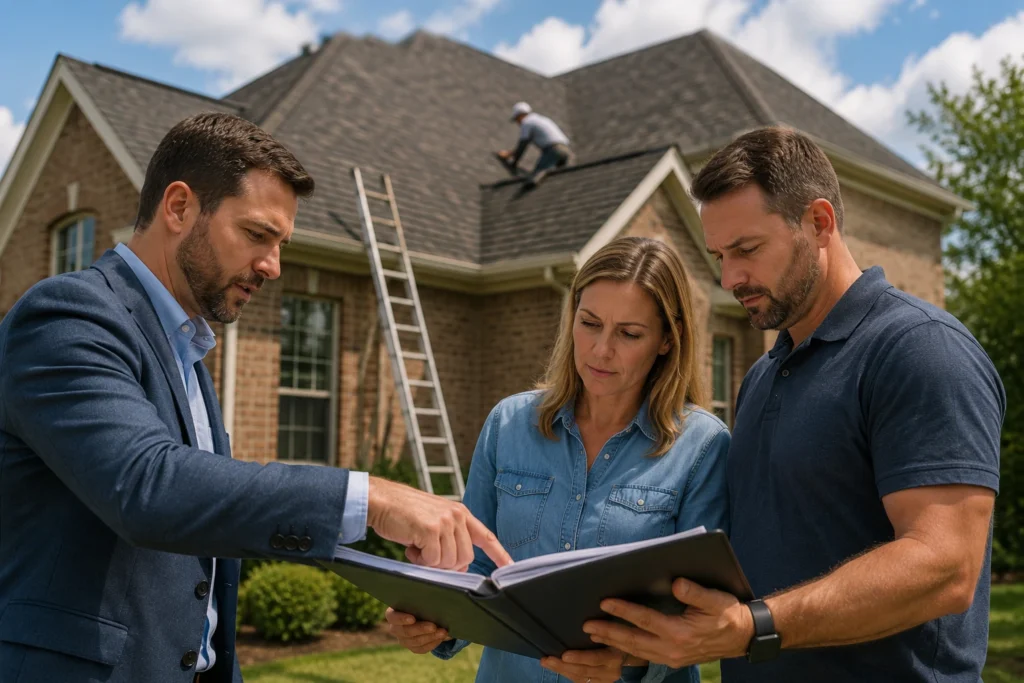
Storm season in Texas can be brutal. One afternoon everything looks fine. The next morning, homeowners are staring at hail impacts, missing shingles, and an insurance claim that suddenly feels much more complicated than expected. That is exactly why understanding matching laws for roof replacement in Terrell, TX has become so important. Many homeowners assume that if part of a roof is damaged, the insurance company will simply replace the entire roof so everything matches. Unfortunately, insurance claims do not always work that way.
A roof may suffer damage on only one slope. A handful of shingles might need replacement. The challenge begins when the original materials are no longer available or when new shingles look dramatically different from the existing roof. Suddenly, the property has a patchwork appearance that affects curb appeal, resale value, and sometimes even neighborhood standards. For homeowners in Terrell, understanding how matching disputes work can make the difference between accepting a partial repair and pursuing a settlement that truly restores the property’s condition. This guide explains what matching laws are, how Texas handles roof matching disputes, and what homeowners can do to strengthen their insurance claims.
What Are Matching Laws in Roof Replacement?
Matching laws are regulations or insurance standards that address what happens when damaged building materials cannot be replaced with identical materials. The concept sounds simple. If an insurer replaces part of a roof, should the repaired section match the rest of the roof? Some states have laws that specifically require insurers to provide matching materials when reasonably possible. Others allow broader interpretation based on policy language and claim circumstances. The issue extends far beyond roofing.
Matching disputes can involve:
- Siding
- Flooring
- Paint
- Tile
- Stone veneers
- Metal panels
- Roofing systems
The goal is often to restore the property’s appearance and functionality as closely as possible to its pre-loss condition. However, insurance carriers and homeowners frequently disagree on what that actually means.
Why Roof Matching Becomes a Major Problem
Roofing materials change constantly. Manufacturers discontinue products. Color blends evolve. Production methods improve. Even if the exact shingle line still exists, years of sun exposure can dramatically alter the appearance of the existing roof. Imagine replacing twenty damaged shingles on a fifteen-year-old roof. The new shingles may technically be the same brand and color. Yet they may stand out immediately.
The result is a roof that looks repaired rather than restored. Many homeowners feel that outcome falls short of what insurance should provide. Insurance companies often view the situation differently. As long as the roof functions properly, some carriers may argue that appearance alone does not justify full replacement. This disagreement sits at the center of many matching disputes.
Does Texas Have a Roof Matching Law?
One of the biggest misconceptions in property insurance is the belief that Texas automatically requires insurance companies to replace an entire roof whenever matching issues arise. That is not the case. Texas does not currently have a specific statewide roof matching statute that automatically requires insurers to replace undamaged portions of a roof solely because new materials do not match existing materials. That surprises many homeowners. Instead, most matching disputes are determined by policy language, claim facts, and the insurer’s interpretation of restoration obligations.
This distinction is critical. When discussing matching laws for roof replacement in Terrell, TX, homeowners should understand that policy wording often carries more weight than any broad assumption about Texas law. A claim involving identical facts may produce different outcomes under different insurance policies. That is why careful policy review becomes so important.
Understanding “Like Kind and Quality”
Many property insurance policies include language requiring repairs using materials of “like kind and quality.” At first glance, that sounds straightforward. In practice, it can create significant disagreement. Homeowners often interpret “like kind and quality” as meaning the repaired roof should look uniform and consistent. Insurance companies may interpret the phrase differently. They may focus on functionality rather than appearance.
If the replacement shingles perform similarly, resist weather similarly, and provide comparable protection, some insurers may argue the requirement has been satisfied. This creates a gray area. A roof can be functional. A roof can also be visibly mismatched. Both statements can be true simultaneously. The challenge becomes determining whether restoration requires aesthetic consistency or merely structural performance.
Why Matching Disputes Are Common in Terrell
North Texas weather creates ideal conditions for matching disputes. Large hail events rarely damage every roof surface equally. Wind-driven storms often impact one elevation more than another. As a result, homeowners frequently face partial roof damage rather than total destruction. This is especially common in Terrell, where severe weather systems can move quickly through the area while producing highly localized damage patterns. The insurance carrier may identify damage to one roof slope. The contractor may recommend replacing multiple slopes. The homeowner simply wants the roof restored properly. That difference in perspective often creates tension during the claim process.
Furthermore, many homes in the area contain roofing systems that have been exposed to years of:
- UV radiation
- Heat cycles
- Wind exposure
- Seasonal weather fluctuations
Consequently, even available replacement shingles may not blend effectively with the existing roof.
Aging Roofs Create Unique Matching Challenges
Age changes everything. A roof installed ten or fifteen years ago rarely looks the same as it did on installation day. Granules wear away. Colors fade. Surface textures evolve. Even premium roofing systems experience noticeable aging. Now consider a partial repair.
The new materials arrive fresh from the manufacturer. The existing materials have spent years under Texas sunlight. The contrast can be striking. Some homeowners compare it to replacing a single board in a weathered wood fence. Technically the repair is complete. Visually, it stands out immediately. Insurance carriers may view this as an acceptable result. Property owners often disagree.
Cosmetic Damage Versus Functional Damage
Insurance companies frequently separate cosmetic concerns from functional concerns. This distinction matters. Functional damage affects the roof’s ability to perform.
Examples may include:
- Punctures
- Cracks
- Missing shingles
- Compromised waterproofing
- Structural deterioration
Cosmetic damage generally involves appearance-related issues.
Examples may include:
- Color differences
- Minor dents
- Surface marks
- Visual inconsistencies
The challenge is that appearance often affects value.
A visibly mismatched roof may influence:
- Buyer perception
- Appraisal results
- Neighborhood aesthetics
- Homeowner association concerns
Homeowners frequently argue that restoration should include appearance because appearance affects marketability. Insurance carriers may focus more narrowly on physical performance.
How Courts and Insurance Professionals View Matching
Across the insurance industry, matching remains one of the most debated property claim topics. Different courts have reached different conclusions. Different policies produce different outcomes. As a result, there is no universal answer. What matters most is the specific claim.
The specific policy. And the specific evidence supporting the homeowner’s position. In many cases, successful matching claims are built through documentation rather than assumptions. Evidence becomes everything. The stronger the documentation, the stronger the argument. This principle applies whether the dispute involves roofing, siding, flooring, or virtually any other building component.
Interestingly, similar evaluation principles can be found in other technical disciplines involving visual assessment and pattern recognition. For example, the concept of morphogenesis examines how complex structures develop and maintain consistency in form. While unrelated to roofing, it illustrates how appearance and structural organization are often interconnected rather than entirely separate concepts.
Can You Get a Full Roof Replacement Because of Matching Issues?
Sometimes. But not automatically. Homeowners should avoid assuming that a matching concern guarantees full replacement. Instead, successful outcomes typically depend on evidence demonstrating why partial repairs cannot reasonably restore the property. Several circumstances may strengthen a matching argument.
Discontinued Roofing Products
Manufacturers regularly discontinue products. When exact materials are unavailable, replacement becomes more challenging. A contractor may determine that no comparable product exists. This evidence can become important during negotiations.
Significant Color Variation
Color mismatch is not always minor. Sometimes the difference is dramatic. A repaired section may be visible from the street. Photographs often become powerful evidence in these situations.
Repair Feasibility Concerns
Certain roofing systems cannot be repaired effectively without affecting surrounding materials. Removing one section may damage adjacent sections. This issue is especially common on older roofs. When repairs create additional risks, broader replacement may become more reasonable.
Community Appearance Standards
Some neighborhoods maintain strict visual standards. A mismatched roof may create compliance concerns. Although HOA requirements do not automatically dictate insurance coverage, they may help support the homeowner’s position.
Evidence That Strengthens Matching Claims
The strongest claims are built on documentation. Not emotion. Not assumptions. Documentation.
Homeowners who believe matching issues exist should consider gathering evidence such as:
| Evidence Type | Why It Matters |
| Contractor Reports | Explains repair limitations |
| Material Availability Reports | Demonstrates discontinued products |
| Manufacturer Documentation | Verifies matching difficulties |
| High-Resolution Photos | Shows visual inconsistencies |
| Drone Photography | Captures roof-wide appearance |
| Inspection Reports | Supports replacement recommendations |
Strong documentation shifts the discussion from opinion to evidence. That distinction can significantly influence claim outcomes.
Understanding the Insurance Company’s Perspective
Many homeowners assume insurers intentionally deny matching requests. The reality is often more complicated. Insurance companies evaluate claims according to policy obligations.
Adjusters are generally tasked with determining:
- Cause of loss
- Scope of damage
- Repairability
- Coverage applicability
If an adjuster concludes that damaged shingles can be repaired individually, the carrier may approve only those repairs. From the insurer’s perspective, the roof has been restored. From the homeowner’s perspective, the roof may still appear damaged. This gap in expectations drives many disputes involving matching laws for roof replacement in Terrell, TX. The challenge is not always whether damage exists.
The challenge is often determining the appropriate scope of restoration. One factor that surprises homeowners is how specialized insurance claim evaluation can become. Similar to discussions surrounding “What a Fire Insurance Adjuster Really Does,” roofing disputes often require detailed analysis of policy language, construction methods, material availability, and damage causation before coverage decisions are made.
The Role of Appraisal in Roof Matching Disputes
When homeowners and insurance companies cannot agree on the scope of repairs, another option may exist. Appraisal. Many property insurance policies contain an appraisal clause designed to resolve disputes involving the amount of loss. This process is often misunderstood. Appraisal is not a lawsuit. It is not mediation. And it is not a coverage determination. Instead, appraisal generally focuses on valuation and scope disagreements.
For example, the insurance company may believe one roof slope requires replacement while the homeowner’s contractor believes multiple slopes should be replaced due to matching concerns. In some situations, appraisal can provide an independent review of those competing positions. Each side selects an appraiser. Those appraisers then attempt to reach an agreement. If necessary, an umpire may become involved.
The process can help resolve disputes faster than litigation while providing an additional layer of review. For homeowners facing disagreements regarding matching laws for roof replacement in Terrell, TX, appraisal may be worth discussing with qualified professionals who understand the policy language and claim circumstances.
When Appraisal May Be Helpful
Not every claim belongs in appraisal.
However, appraisal can become valuable when the dispute centers on:
- Repair versus replacement
- Scope of roof damage
- Quantity of materials needed
- Matching-related replacement recommendations
- Pricing disagreements
- Contractor estimate differences
The key issue is whether the disagreement involves the amount of loss rather than whether coverage exists at all. Every policy is different. Every claim is different. That is why professional guidance can be valuable before making important claim decisions.
Building a Strong Roof Matching Claim
Homeowners often underestimate how much evidence matters. Insurance claims are documentation-driven. The strongest matching arguments typically include detailed records that clearly demonstrate why repairs cannot adequately restore the property. Let’s look at practical steps homeowners can take.
Document the Entire Roof
Do not focus solely on damaged areas. Capture the entire roofing system.
Photographs should include:
- Overall roof views
- Individual roof slopes
- Close-up damage images
- Material condition
- Color variation
- Areas visible from the street
The goal is to tell the complete story. Partial photographs often create incomplete conclusions.
Use Drone Photography When Available
Drone technology has changed roof inspections dramatically.
Aerial imagery can reveal:
- Roof-wide damage patterns
- Slope comparisons
- Material inconsistencies
- Storm impact distribution
High-quality aerial images can become valuable claim evidence.
Preserve Material Samples
If roofing materials are removed during inspections or repairs, consider preserving samples whenever possible.
These samples may assist:
- Manufacturers
- Engineers
- Material identification services
- Appraisers
The more evidence available, the better.
Request Material Availability Reports
Sometimes the strongest matching evidence comes directly from manufacturers. If the original shingles are discontinued, documentation confirming that fact may significantly strengthen a homeowner’s position. Written reports often carry considerable weight during claim discussions.
Why Early Inspections Matter
Time is not always a homeowner’s friend. Storm damage documentation becomes more difficult as months pass. Weather continues affecting the roof. Repairs may occur. Evidence may disappear. The sooner a qualified inspection occurs, the easier it becomes to establish a clear connection between storm damage and necessary repairs. Early inspections can also identify issues that homeowners might overlook.
For example:
- Lifted shingles
- Creased shingles
- Flashing damage
- Vent damage
- Hidden hail impacts
Many forms of storm damage are not obvious from the ground. Waiting too long can complicate the claim process unnecessarily.
How Public Adjusters Can Help With Matching Claims
Many homeowners have never worked with a public adjuster. In fact, most hope they never need one. However, matching disputes are often complex. Public adjusters represent policyholders rather than insurance companies. Their role involves evaluating losses, reviewing policy provisions, documenting damage, and negotiating claim settlements. For matching disputes, a public adjuster may assist with:
Independent Damage Evaluation
An independent inspection can provide a fresh perspective on the scope of loss.
This evaluation often includes:
- Roof inspections
- Damage documentation
- Repairability analysis
- Material matching concerns
The objective is to identify all covered damage rather than only the most obvious damage.
Policy Review
Insurance policies contain important details that many homeowners never read until a loss occurs.
A public adjuster may review:
- Replacement cost provisions
- Endorsements
- Exclusions
- Limitations
- Matching-related language
Small wording differences can significantly affect claim outcomes.
Claim Presentation
Evidence matters. Presentation matters too.
A well-organized claim package often includes:
- Photographs
- Inspection reports
- Contractor estimates
- Material reports
- Supporting documentation
This organized approach can help focus discussions on facts rather than opinions.
Negotiation Support
Insurance negotiations can be intimidating. Especially after a major storm. Public adjusters communicate directly with carriers regarding scope and valuation issues, helping homeowners navigate complicated claim discussions.
Common Insurance Company Arguments Against Full Roof Replacement
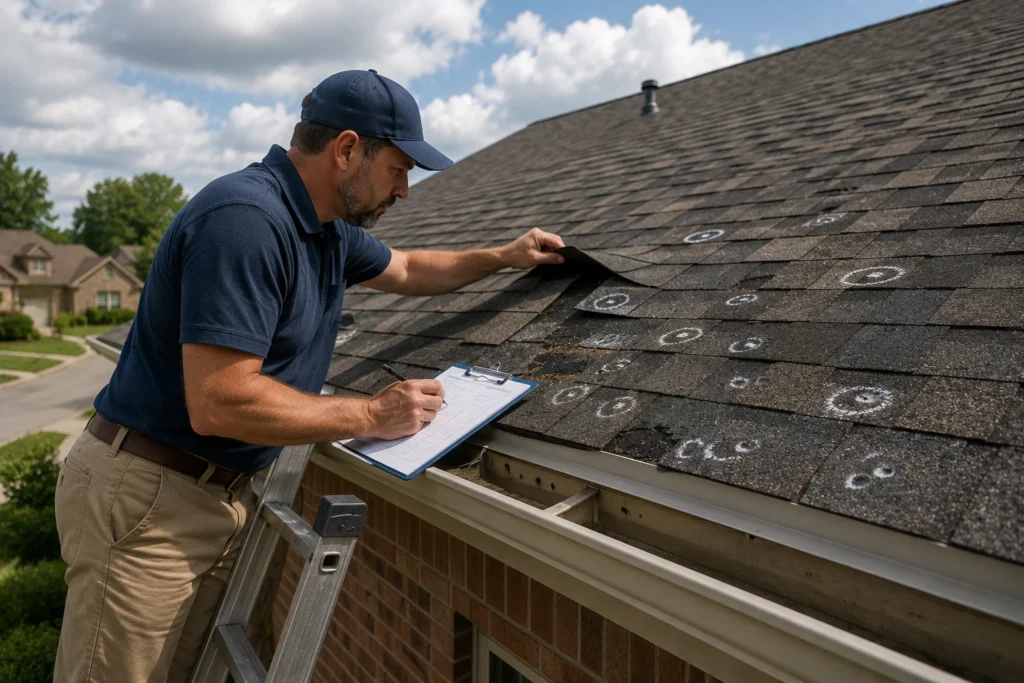
Understanding the carrier’s position helps homeowners prepare more effectively. Several arguments appear frequently during matching disputes.
“The Roof Can Be Repaired”
This is perhaps the most common argument. If damaged materials can be replaced individually, the insurer may argue that replacement of undamaged areas is unnecessary. The homeowner’s evidence must demonstrate why repair alone fails to restore the property adequately.
“Comparable Materials Exist”
Insurers may identify replacement products they believe are sufficiently similar. Contractors may disagree. This often becomes a battle of documentation and expert opinions.
“The Difference Is Cosmetic”
Carriers sometimes classify matching concerns as appearance-related rather than functional. Homeowners may respond by demonstrating impacts on value, marketability, or neighborhood standards.
“Policy Language Does Not Require Matching”
Policy wording frequently becomes central to the discussion. This is why careful policy analysis remains so important throughout the claim process.
Special Considerations for Homeowners in Terrell
Every community has unique characteristics. Terrell is no exception. Homeowners in the area face weather patterns that can create substantial roofing losses. Hail storms. Wind events. Heavy rain. Sudden temperature shifts. These conditions can contribute to both immediate damage and long-term roofing deterioration.
Because many neighborhoods contain homes built during similar time periods, matching issues may become especially noticeable after storm repairs. A newly repaired roof section can stand out dramatically against older roofing materials. For homeowners concerned about curb appeal, this becomes more than a cosmetic issue. It becomes a property value concern. That is one reason discussions surrounding matching laws for roof replacement in Terrell, TX continue to attract attention among homeowners, contractors, and insurance professionals alike.
Protecting Property Value After a Storm
A roof serves multiple purposes. Most people immediately think about protection. That is certainly important.
However, a roof also contributes significantly to:
- Home appearance
- Neighborhood consistency
- Buyer perception
- Property value
When repairs result in obvious mismatching, homeowners often worry about future resale challenges.
Potential buyers may question:
- Whether storm damage was fully repaired
- Whether additional repairs are needed
- Whether the roof has ongoing issues
These concerns may arise even when the roof functions properly. This is why appearance-related disputes remain so important despite insurance companies frequently emphasizing functionality.
Practical Steps Homeowners Should Take After Storm Damage
If your roof experiences hail or wind damage, consider the following action plan.
Step 1: Document Everything
Take photographs immediately.
Capture:
- Roof areas visible from the ground
- Gutters
- Downspouts
- Siding
- Windows
- Outdoor structures
More documentation is usually better.
Step 2: Schedule a Professional Inspection
Professional inspections often identify damage that homeowners cannot safely evaluate themselves. Never climb onto a roof unless properly trained and equipped.
Step 3: Review Your Insurance Policy
Do not rely on assumptions. Read the policy.
Pay particular attention to:
- Roof coverage provisions
- Deductibles
- Cosmetic damage exclusions
- Replacement cost language
Step 4: Obtain Multiple Opinions
Different contractors may reach different conclusions. Additional opinions often provide valuable perspective.
Step 5: Keep Organized Records
Create a claim file containing:
- Inspection reports
- Estimates
- Emails
- Photographs
- Carrier correspondence
Organization can simplify the entire claim process.
Real-World Roof Matching Scenarios Homeowners Encounter
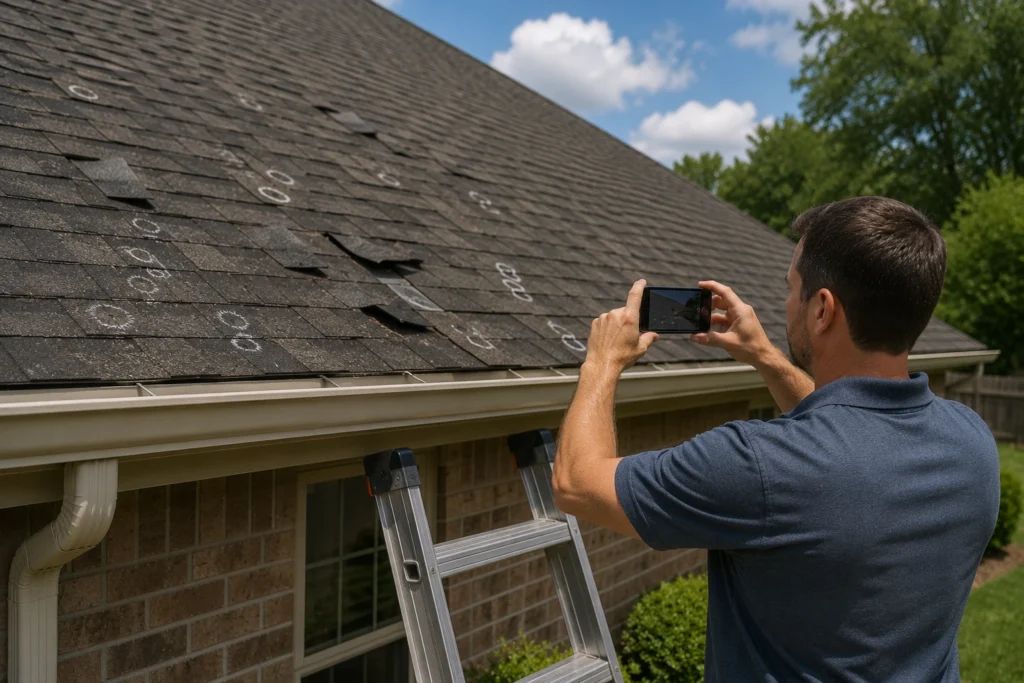
Understanding matching disputes becomes easier when you look at real-world situations. While every insurance claim is unique, certain scenarios appear repeatedly after hail and wind storms across North Texas.
Scenario 1: The Discontinued Shingle Problem
A homeowner experiences hail damage on one roof slope. The insurance company agrees that repairs are necessary and approves replacement of the damaged shingles. There is one problem. The original shingles were manufactured more than a decade ago and are no longer available.
The contractor contacts suppliers throughout the region and confirms that the exact product cannot be obtained. Similar products exist, but none provide a close visual match. In situations like this, documentation becomes extremely important. Material availability reports, supplier letters, and manufacturer correspondence may help demonstrate why a simple repair may not adequately restore the roof.
Scenario 2: Severe Weathering Creates Obvious Differences
Sometimes the original roofing material is still available. That sounds like good news. However, years of sun exposure may have dramatically changed the appearance of the existing roof.
When brand-new shingles are installed beside weathered shingles, the repaired area can become highly visible from the street. Homeowners often argue that the result negatively affects curb appeal and property value. Photographs taken from multiple angles frequently become key evidence in these disputes.
Scenario 3: Multiple Slopes Show Related Damage
Another common scenario involves damage spread across several roof sections. The insurance company may identify enough damage to replace one slope while concluding that neighboring slopes remain repairable. The roofing contractor may disagree.
Why?
Because removing and replacing one section may affect surrounding materials or create visible inconsistencies throughout the roof system. These disputes often revolve around repair feasibility rather than matching alone.
Scenario 4: Neighborhood Appearance Concerns
Many residential communities place a strong emphasis on maintaining a consistent appearance. A roof with visibly different materials on multiple slopes may stand out significantly compared to surrounding homes.
Although neighborhood standards do not automatically require an insurance company to replace an entire roof, they may provide additional context supporting the homeowner’s concerns. The key point is that matching disputes rarely involve a single issue. Instead, they often involve a combination of factors, including material availability, roof age, repair feasibility, appearance concerns, and policy language.
Mistakes Homeowners Should Avoid During Matching Disputes
Unfortunately, some homeowners unintentionally weaken otherwise valid claims. Avoiding these mistakes can help preserve important evidence and improve communication throughout the process.
Assuming the Insurance Company Will Handle Everything
Many homeowners believe the carrier will automatically identify every issue. That may not happen. Insurance adjusters inspect numerous properties and may not have access to the same information as contractors, engineers, or material specialists. Taking an active role in the claim process can help ensure important details are not overlooked.
Failing to Take Photographs
Photos provide powerful evidence. Take pictures before temporary repairs begin whenever it is safe to do so. Continue documenting conditions throughout the claim process. Photograph damage from multiple angles and distances. Wide shots establish context, while close-up images highlight specific concerns. Together, they create a more complete record of the loss.
Throwing Away Damaged Materials
Preserving samples can be valuable. Those materials may later assist with product identification or matching analysis. In some cases, manufacturers or material experts can use retained samples to determine whether an exact replacement still exists or whether the product has been discontinued.
Waiting Too Long to Investigate
Delays can complicate claims. Evidence may deteriorate, weather conditions may change, and documentation opportunities may be lost.
Even if a roof is not actively leaking, hidden damage may worsen over time. Prompt inspections help establish a clear timeline and strengthen the connection between the storm event and the observed damage.
Accepting Verbal Statements Without Documentation
Whenever possible, obtain important conclusions in writing. Written reports from contractors, manufacturers, and inspectors often carry more weight than informal conversations. If a supplier confirms that materials are unavailable, ask for written confirmation. If a contractor believes repairs will create a mismatched appearance, request documentation explaining why.
The stronger the paper trail, the stronger the claim file. By avoiding these common mistakes, homeowners place themselves in a stronger position when addressing concerns involving matching laws for roof replacement in Terrell, TX.
Common Myths About Roof Matching Claims
Several myths continue to create confusion among homeowners. Let’s separate fact from fiction.
Myth #1: Texas Automatically Requires Full Roof Replacement
Not necessarily. Texas does not have a blanket roof matching law requiring full replacement in every situation. Policy language and claim facts remain critical. A homeowner with one policy may achieve a different outcome than a homeowner with another policy, even when the damage appears similar.
Myth #2: Matching Claims Are Always Denied
False. Many matching disputes result in additional payments when sufficient evidence supports broader replacement. The key is demonstrating why partial repairs fail to restore the roof adequately. Strong documentation often makes the difference.
Myth #3: Appearance Never Matters
Also false. Appearance can affect property value, neighborhood standards, and marketability. Those factors may become relevant during claim discussions, particularly when a repaired roof creates obvious visual inconsistencies.
Myth #4: The Insurance Company’s First Decision Is Final
Many homeowners do not realize additional review options may exist. Supplemental claims, appraisals, and professional representation can sometimes change outcomes. A denied request for full replacement does not automatically mean the discussion is over.
Myth #5: Every Contractor Understands Matching Disputes
Roofing expertise and insurance expertise are not always the same thing. A contractor may understand installation perfectly but have limited experience with insurance claim documentation. Likewise, an insurance professional may understand policy language but not fully appreciate construction challenges. The strongest results often come from professionals who understand both construction and claims processes.
Why Documentation Often Determines the Outcome
If there is one lesson homeowners should remember, it is this: Documentation wins disputes. Insurance companies make decisions based on evidence. Contractors support recommendations with evidence.
Appraisers rely on evidence. Courts review evidence. The homeowner who documents thoroughly is usually in a stronger position than the homeowner who relies solely on verbal explanations.
Consider creating a dedicated claim folder that contains:
| Document Type | Purpose |
| Photographs | Demonstrate damage and matching concerns |
| Inspection Reports | Establish professional findings |
| Estimates | Support repair or replacement costs |
| Material Reports | Verify availability issues |
| Insurance Correspondence | Track claim communications |
| Manufacturer Letters | Confirm product status |
| HOA Documents | Support appearance concerns |
Organization may seem simple, but it can have a significant impact on how efficiently a claim progresses.
Looking Beyond the Initial Settlement Offer
Many homeowners assume the first settlement offer represents the final word. Sometimes it does. Sometimes it does not. Insurance claims evolve as additional information becomes available. A contractor may discover hidden damage during repairs. A manufacturer may confirm materials are discontinued. Additional inspections may reveal repair limitations that were not initially apparent. These developments can affect the scope of loss. That is why homeowners should carefully review settlement documents and understand what work the approved estimate actually includes.
Questions worth asking include:
- Does the estimate include all damaged areas?
- Are matching concerns addressed?
- Are discontinued materials documented?
- Is the approved scope realistic?
- Have all roof components been evaluated?
Taking time to understand the estimate can prevent surprises later in the process.
The Long-Term Impact of Roof Matching Decisions
Roof repairs are not temporary cosmetic projects. They are investments in the home’s future.
A poorly matched roof may affect:
- Curb appeal
- Property value
- Buyer confidence
- Neighborhood appearance
- Future maintenance planning
While insurance companies often focus on restoring functionality, homeowners naturally consider the broader impact on their property. That perspective is understandable. After all, most people spend years building equity in their homes.
Protecting that investment matters. When matching concerns arise, the discussion should focus on facts, documentation, and reasonable restoration expectations rather than assumptions.
Final Thoughts on Matching Laws for Roof Replacement in Terrell, TX
Roof matching disputes are rarely simple. What appears straightforward on the surface often involves policy interpretation, material availability, repair feasibility, and competing opinions regarding what true restoration requires. For homeowners researching matching laws for roof replacement in Terrell, TX, the most important takeaway is this: there is no automatic answer. Some claims justify partial repairs. Others may support broader replacement. The outcome often depends on the quality of documentation, the specific policy language, and the evidence demonstrating why matching matters in that particular situation.
Homeowners in Terrell who experience hail or wind damage should approach the claim process with patience, organization, and a willingness to gather supporting documentation. Those efforts can significantly improve communication with the insurance company and help create a clearer picture of the property’s restoration needs. If storm damage affects your roof, act quickly. Document thoroughly. Review your policy carefully.
Seek professional opinions when necessary. Most importantly, remember that insurance claims are strongest when supported by facts, photographs, and detailed evidence rather than assumptions. A roof is one of the most important components of any home. When damage occurs, homeowners deserve a clear understanding of their rights, their options, and the factors that may influence whether a repair or full replacement is truly appropriate. By understanding the realities behind matching laws for roof replacement in Terrell, TX, homeowners can make informed decisions and pursue claim outcomes that better protect both their property and their investment.
The goal is not simply to obtain more coverage. The goal is to achieve a fair restoration that returns the property as closely as possible to its pre-loss condition. Whether that involves repairs, partial replacement, or a full roof replacement will depend on the unique facts of each claim. However, homeowners who understand the issues surrounding matching are often better prepared to advocate for themselves and make informed decisions throughout the process.
FAQs
No. Texas does not have a statewide roof matching law, so coverage often depends on the policy language and claim circumstances.
Possibly. If matching materials are unavailable, documentation from manufacturers and contractors may support a broader replacement claim.
It generally refers to replacing damaged materials with materials of similar function and quality, though interpretations can vary.
Sometimes. Coverage depends on the policy terms and whether cosmetic issues affect the roof’s value or functionality.
Yes. A visibly mismatched roof may affect curb appeal, buyer perception, and overall marketability.
Photos, contractor reports, manufacturer letters, material availability reports, and inspection documentation can all strengthen a claim.
A public adjuster may help evaluate damage, review policy language, and negotiate with the insurance company on your behalf.
You can review the estimate, gather additional evidence, and explore options such as supplemental claims or appraisal.
As soon as safely possible. Early inspections help preserve evidence and establish a clear timeline for the damage.
Yes. Appraisal may help when the dispute involves the amount of loss or scope of repairs rather than coverage itself.