

A property disaster hits fast. A storm tears through the roof. A pipe bursts overnight. Fire, wind, hail, or flooding suddenly turns a comfortable home into a repair project. In those moments, the insurance claim becomes the lifeline for recovery. And this is exactly when many homeowners begin asking the question: why hire public adjusters?
The truth is simple. Insurance claims are rarely simple.
Policies are dense documents. Damage assessments require expertise. Negotiations with insurers can drag on for weeks or months. When homeowners try to manage everything alone, they often discover the process is far more complicated than expected.
That is where public adjusters come in.
A public adjuster works for the policyholder—not the insurance company. Their job is to document the damage, interpret the policy, and negotiate the settlement so the homeowner receives the compensation the policy allows.
I have seen many homeowners attempt to navigate the claims process alone. Some succeed. Many don’t. The difference often comes down to experience, documentation, and negotiation skill. Understanding why hire public adjusters can make the difference between a stressful claim and a successful recovery.
Let’s break it down.
What Is a Public Adjuster?
A public adjuster is a licensed professional who represents policyholders during insurance claims. Their role is to evaluate property damage, prepare the claim documentation, and negotiate with the insurance company on behalf of the homeowner.
They are different from other adjusters you might encounter during a claim.
Types of Insurance Adjusters
There are generally three types of adjusters involved in property claims.
| Adjuster Type | Who They Work For | Role |
| Company Adjuster | Insurance company | Investigates claims on behalf of the insurer |
| Independent Adjuster | Insurance company (contract basis) | Handles claims outsourced by insurers |
| Public Adjuster | Policyholder | Represents the homeowner in the claim process |
This distinction matters.
Company and independent adjusters represent the insurer’s interests. Public adjusters represent yours.
That alone explains a big part of why hire public adjusters after property damage.
Why Hire Public Adjusters After Property Damage
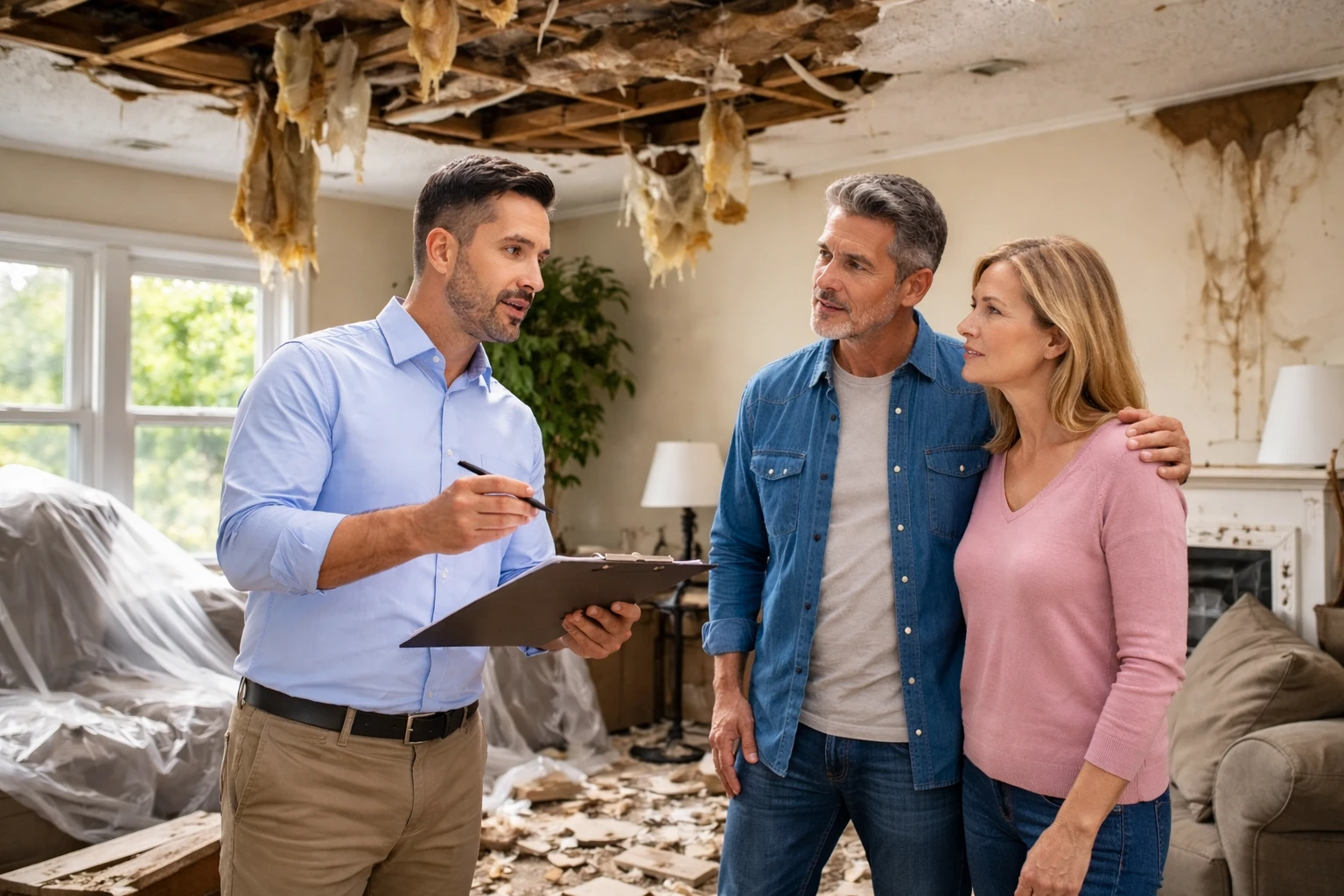
After damage occurs, homeowners must immediately start managing the insurance claim. At first glance, the process seems straightforward. File a claim. Meet with the adjuster. Receive payment.
In reality, the process is far more involved.
Several issues commonly appear during insurance claims:
- Damage that is underestimated
- Repair costs that exceed insurer estimates
- Disagreements about coverage
- Missing items from inventory lists
- Delayed claim responses
These challenges often leave homeowners feeling overwhelmed.
Understanding why hire public adjusters starts with recognizing just how complex insurance claims can become.
Insurance Policies Are Complicated
Insurance policies are not casual reading.
They contain detailed provisions about:
- coverage limits
- exclusions
- deductibles
- depreciation
- policy endorsements
A single clause can affect thousands of dollars in coverage.
Many homeowners assume that if damage occurs, the policy automatically covers everything. Unfortunately, the reality is more nuanced.
Public adjusters review the policy carefully and determine:
- what damage is covered
- what documentation is required
- what repair standards must be applied
Without this knowledge, important parts of a claim can easily be overlooked.
This is one of the biggest reasons why hire public adjusters becomes an important decision after property damage.
Insurance Companies Protect Their Interests
Insurance companies are businesses. Their job is to manage risk and control claim costs.
That does not mean insurers act unfairly. But it does mean they rely on procedures designed to evaluate claims carefully.
From the homeowner’s perspective, that process can sometimes feel like a negotiation.
Insurance companies typically rely on:
- internal estimating software
- company guidelines
- adjuster inspections
If the damage assessment is incomplete, the claim payment may be lower than the actual repair cost.
Public adjusters act as the policyholder’s advocate during this stage. They review the insurer’s estimate, compare it with actual damage, and present evidence when adjustments are needed.
When homeowners ask why hire public adjusters, this advocacy is often the main reason.
Claims Require Extensive Documentation
A successful insurance claim depends heavily on documentation.
This includes:
- photographs of the damage
- written descriptions
- repair estimates
- building material costs
- inventory lists of damaged items
Even small mistakes can affect the claim outcome.
For example, homeowners sometimes forget to include hidden damage behind walls or under flooring. These oversights can reduce the claim value significantly.
Public adjusters prepare detailed claim packages that include:
- room-by-room damage reports
- structural assessments
- replacement cost calculations
Thorough documentation strengthens the claim and reduces disputes with the insurer.
Key Benefits of Hiring a Public Adjuster
The value of a public adjuster becomes clear once the claims process begins.
Here are several major benefits homeowners experience.
Professional Damage Assessment
Public adjusters know how to evaluate property damage thoroughly.
They look for:
- structural issues
- hidden water damage
- roofing damage after storms
- smoke or soot damage after fires
Many of these issues are not immediately visible to homeowners.
By identifying the full scope of damage, public adjusters help ensure that repair estimates reflect the true cost of restoring the property.
This professional evaluation is a major reason why hire public adjusters after disasters.
Accurate Claim Documentation
Preparing a claim requires precision.
Public adjusters create detailed documentation such as:
- damage reports
- itemized repair estimates
- photographic evidence
- building code upgrade requirements
This information forms the foundation of the claim.
Without it, insurance companies may have difficulty verifying the scope of damage.
Negotiation With Insurance Companies
Insurance claims often involve discussions between the policyholder and the insurer.
These conversations may include:
- estimate revisions
- coverage clarifications
- settlement negotiations
Public adjusters handle these communications directly.
They understand the claims process, the documentation requirements, and the negotiation strategies involved. This experience helps move the claim forward efficiently.
Maximizing Claim Payouts
One of the primary reasons why hire public adjusters is the potential to recover the full value of a claim.
Public adjusters ensure that:
- all covered damages are included
- repair estimates reflect real market costs
- depreciation is applied correctly
- overlooked damages are documented
This attention to detail often leads to more accurate claim settlements.
Saving Time and Reducing Stress
Insurance claims require significant time and effort.
Homeowners must coordinate inspections, gather documentation, communicate with adjusters, and track deadlines.
During an already stressful situation, managing these tasks alone can feel overwhelming.
Public adjusters handle much of this workload.
Their involvement allows homeowners to focus on repairing their homes and returning to normal life.
When You Should Consider Hiring a Public Adjuster
Not every claim requires professional representation. However, certain situations strongly benefit from it.
Large or Complex Claims
Major property damage often involves multiple types of repairs.
Examples include:
- fire damage
- severe storm damage
- extensive water damage
- commercial property losses
These claims can involve hundreds of thousands of dollars in repairs. Professional guidance becomes extremely valuable.
Claim Delays or Disputes
Sometimes claims stall.
Homeowners may experience:
- delayed responses from insurers
- partial claim payments
- disagreements over damage scope
Public adjusters help resolve these disputes by presenting additional documentation and negotiating adjustments.
When Policy Language Is Confusing
Insurance policies are not always easy to interpret.
Public adjusters analyze policy language and explain how coverage applies to specific damage situations.
This clarity helps homeowners understand their rights during the claim process.
How Public Adjusters Work During the Claims Process

Public adjusters follow a structured approach when handling insurance claims.
Step 1: Initial Inspection
The adjuster visits the property to evaluate visible and hidden damage.
This inspection may include:
- roof evaluation
- structural assessment
- interior damage review
Step 2: Policy Review
Next, the adjuster studies the insurance policy to determine applicable coverage.
They identify:
- covered losses
- coverage limits
- special policy provisions
Step 3: Claim Preparation
Public adjusters prepare the claim documentation.
This typically includes:
- repair estimates
- damage inventories
- photo evidence
Step 4: Negotiation With the Insurance Company
Once the claim package is submitted, negotiations may begin.
Public adjusters communicate directly with the insurance company to clarify damage assessments and resolve disagreements.
Step 5: Settlement Agreement
When both parties agree on the claim value, the settlement is finalized and payment is issued.
This structured process explains another important aspect of why hire public adjusters.
How Public Adjusters Are Paid
Public adjusters usually work on a contingency fee basis.
This means they receive payment only if the claim is successfully settled.
Typical fee structures range between:
| Claim Type | Typical Fee Range |
| Residential claims | 5% – 15% of settlement |
| Commercial claims | 5% – 12% |
Because payment depends on claim recovery, public adjusters are motivated to pursue the best possible settlement for the policyholder.
Myths About Hiring Public Adjusters
Several misconceptions surround public adjusters.
Myth 1: Public Adjusters Are Too Expensive
Many homeowners assume hiring a public adjuster will significantly reduce their settlement.
However, adjusters often help recover damages that might otherwise be overlooked.
Myth 2: Insurance Companies Always Offer Full Settlements
Insurance estimates sometimes differ from contractor estimates. When this happens, negotiations may be required to reach a fair settlement.
Myth 3: Only Large Disasters Require Adjusters
Even moderate claims can become complicated.
Water damage, roof damage, and structural issues may require detailed evaluation.
How to Choose the Right Public Adjuster in Terrell, Texas
Selecting the right professional is important.
Homeowners should consider several factors.
Verify Licensing
Public adjusters must hold a state license. Always confirm licensing before hiring.
Check Experience
Ask about the adjuster’s experience handling claims similar to yours.
Ask for References
Speaking with previous clients can help verify professionalism and reliability.
Review the Contract Carefully
Understand the fee structure, services provided, and timeline expectations before signing.
Why Local Public Adjusters Offer an Advantage
Hiring a local adjuster provides several benefits.
Local professionals understand:
- regional weather patterns
- common property damage issues
- local building costs
In areas like Terrell, Texas, storms and hail damage are frequent causes of property claims. Local adjusters are familiar with these conditions and the repair standards required.
This regional expertise is another reason why hire public adjusters when filing property claims.
Questions to Ask Before Hiring a Public Adjuster
Before selecting a public adjuster, homeowners should ask several key questions:
- Are you licensed in Texas?
- How many claims have you handled?
- What percentage do you charge?
- Will you manage all communication with the insurer?
- How long does the claims process usually take?
Clear answers to these questions help ensure a smooth working relationship.
Final Thoughts: Is Hiring a Public Adjuster Worth It?
Recovering from property damage is never easy. Between inspections, paperwork, and negotiations, insurance claims can quickly become overwhelming.
That is why many homeowners ultimately decide why hire public adjusters is not just a question—it is a strategy.
Public adjusters provide expertise, documentation, negotiation skills, and peace of mind. They help ensure claims are handled properly and settlements reflect the true cost of repairing the damage.
For homeowners facing complicated claims, professional representation can make the recovery process smoother, faster, and far less stressful.
And when your home is on the line, having an expert in your corner makes all the difference.
FAQs
A public adjuster is a licensed professional who represents policyholders during insurance claims and helps evaluate damage, prepare documentation, and negotiate settlements with insurers.
Many homeowners hire public adjusters because they understand insurance policies, document damage thoroughly, and negotiate with insurers to help ensure a fair claim settlement.
It’s best to hire a public adjuster soon after property damage occurs, especially if the claim is large, complex, or if you feel overwhelmed by the insurance process.
Public adjusters typically work on a contingency fee basis, meaning they receive a percentage of the claim settlement only after the claim is successfully resolved.
No, public adjusters work exclusively for policyholders and advocate for their interests during the insurance claim process.
In some cases, claims may be reopened if additional damage is discovered or if the policy allows supplemental claims, but this depends on the specific policy and settlement terms.
The timeline varies depending on the complexity of the damage and the insurance company’s response, but a public adjuster can help move the process forward by managing documentation and negotiations.
Yes, public adjusters in Texas must be licensed by the state and follow regulations designed to protect policyholders during the claims process.
Public adjusters often assist with claims involving fire damage, water damage, storm damage, hail damage, and other major property losses.
While outcomes vary, public adjusters aim to identify all covered damages and present detailed documentation, which can help ensure the claim reflects the full scope of the loss.